
You call, and we set up a visit
Call us or send a message through the form, and we'll find a time for me to come out to the house. Most people call about ice dams, a cold room or a bill that keeps climbing, and any of those is a fine place to start.
Ice dams, a drafty upstairs or a heating bill that keeps climbing? We find where warm air leaks into your attic and seal it.
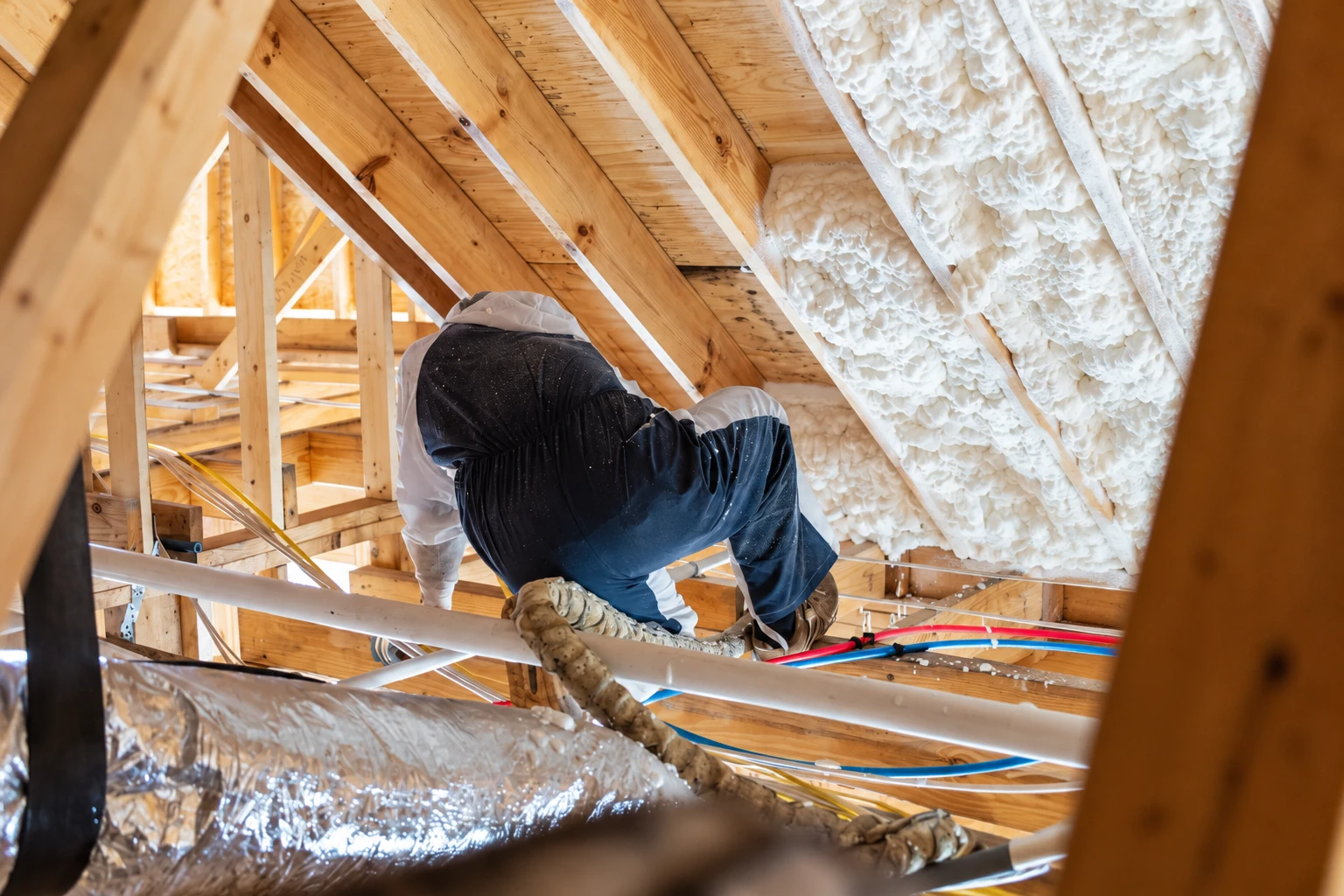
Air sealing services in Rochester close the gaps around plumbing vents, wires, chimneys, can lights and the attic hatch, so warm, damp air from your living space stops leaking into the attic and the insulation up there can do its job.
Most calls I get start with ice on the eaves, a bedroom that won't warm up or a heating bill that keeps creeping higher. People usually assume they need more insulation, and that's often part of it. But in a house people live in, the bigger problem is usually the holes in the ceiling under the insulation, and piling more on top of a draft just buries the problem.
The price depends mostly on how many gaps there are and how hard they are to reach, so attic flooring, a lot of stored boxes, a low roof or old insulation that has to come out first all add to it. The schedule depends on what I find up there, because water, old wiring or anything else that changes the plan gets handled before anyone seals over it. You get your own number in my written estimate, after I've been up there.
Here's who does what, from your first call to the end of the job.
Call us or send a message through the form, and we'll find a time for me to come out to the house. Most people call about ice dams, a cold room or a bill that keeps climbing, and any of those is a fine place to start.
I do every estimate myself. I go up in the attic or down in the crawl space and look for leaks, water and anything else that changes the plan, then write up what I found and what it'll take. I've run this business since 2017, and before that I spent years insulating new houses before the drywall went up, so I know what a ceiling looks like from both sides.
Once you say yes, we sort out any permit, do the prep and the sealing, then the insulation, and walk you through what we did before we leave. Our install crew does the work, and I'm on the job to check the sealing before insulation covers it. We're licensed and insured.
Before we tighten a house up, I look at how your furnace, water heater and fans get their air, because a tighter house still has to let them breathe and vent outside, or the moisture and fumes stay inside with you. I also check for bath fans that blow straight into the attic, which is a good way to grow mold on the underside of your roof. Once that's settled, the crew seals the openings, biggest first, then cleans up, because someone lives in the house and the hallway under the hatch should look the way we found it.
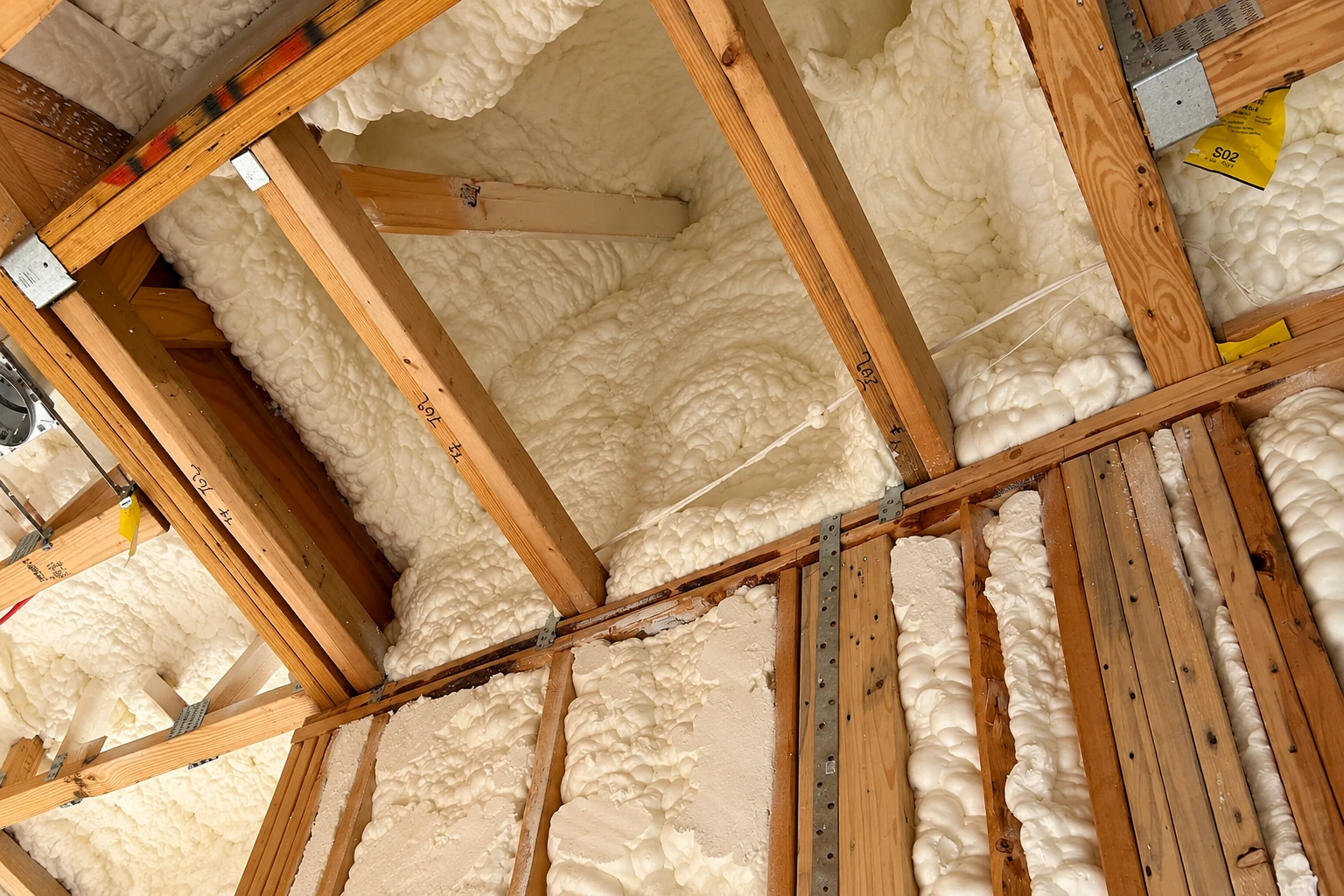
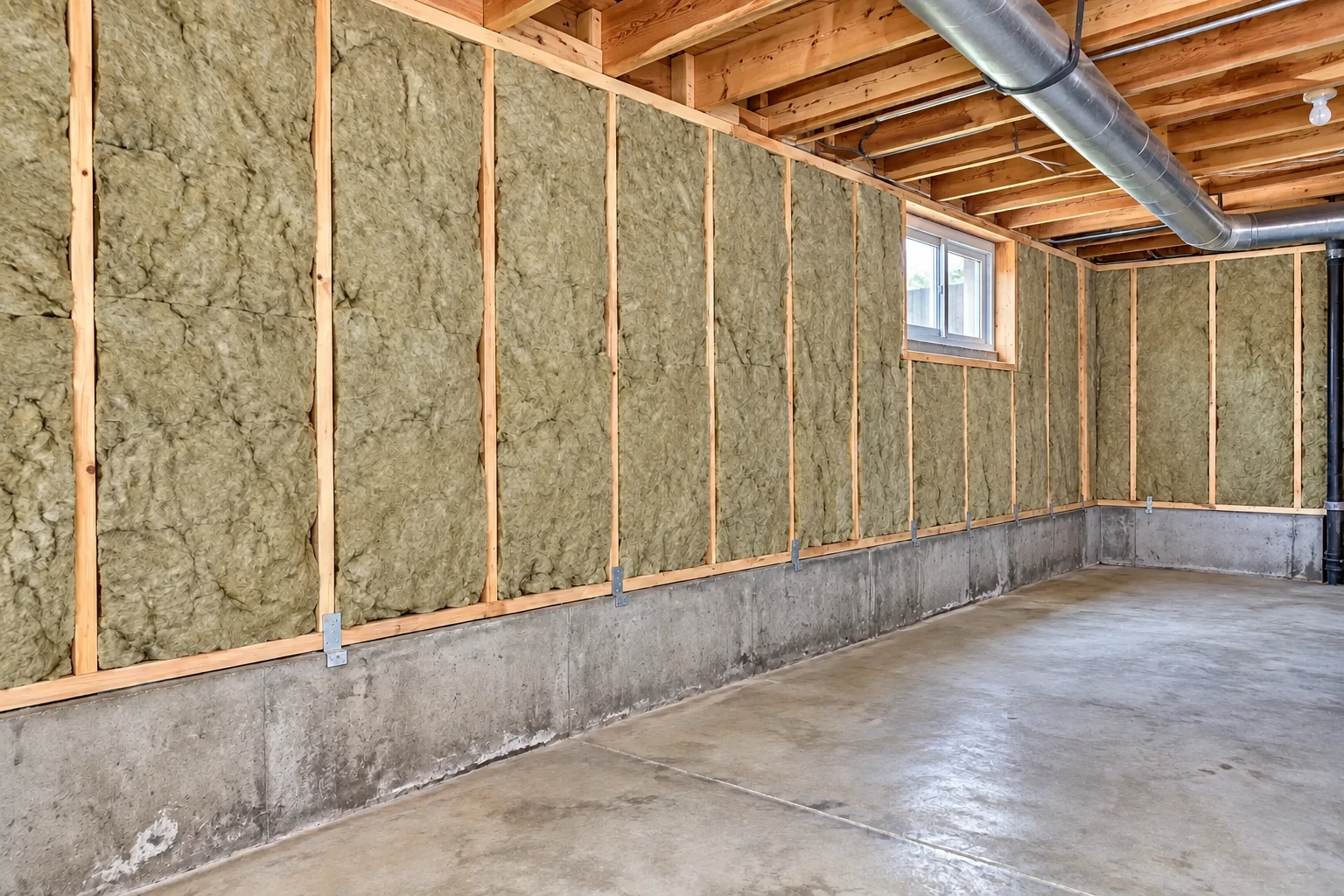
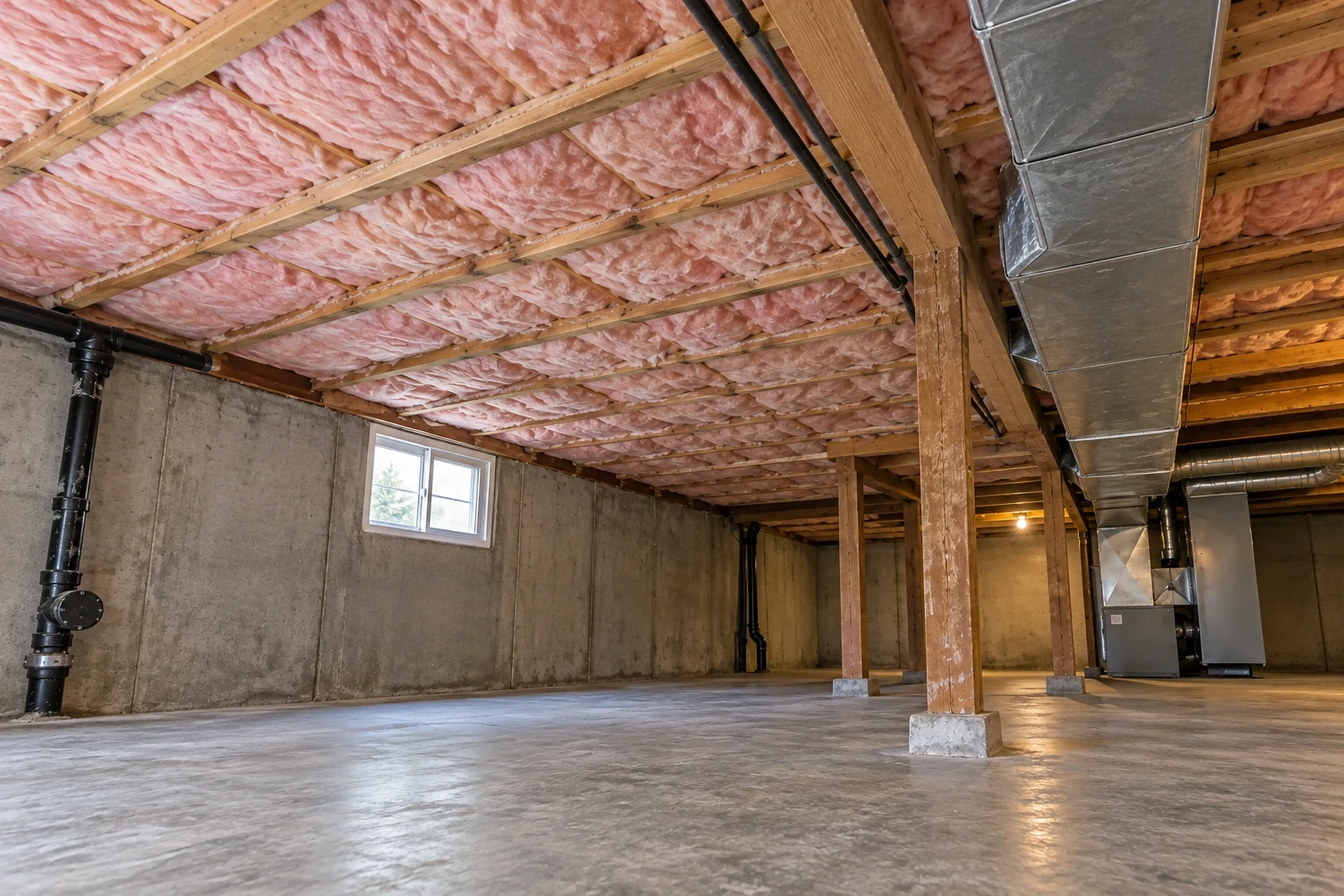
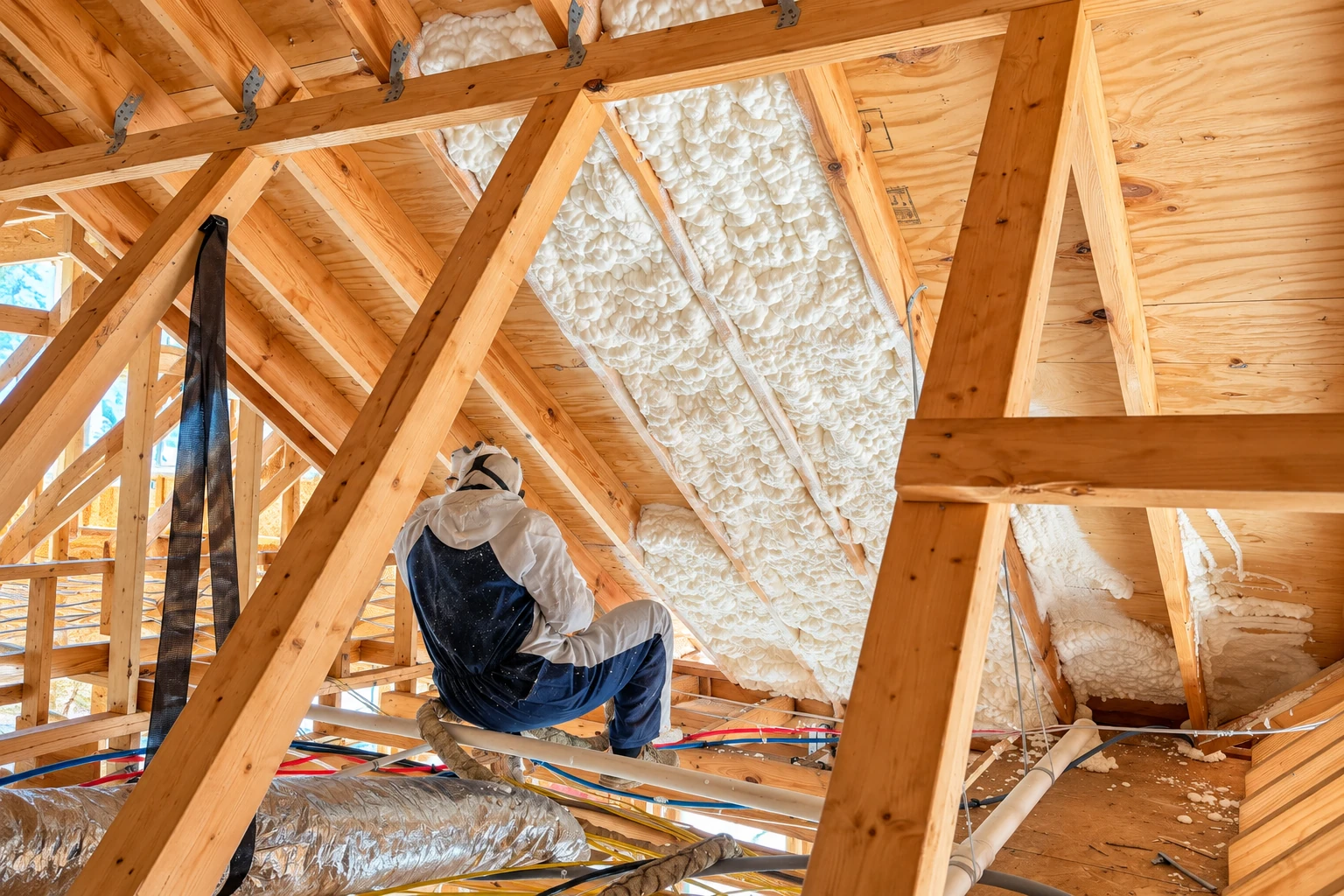
Sealing is usually half the job. Once the ceiling is tight, a top-up of blown-in insulation, which is loose fill blown in through a hose, finishes it, and for most attics that's what I'd recommend. Closed-cell foam insulation, a dense foam that blocks air and moisture while it insulates, costs more, and it's worth the extra when your ductwork runs through the attic. Leaks don't stop at the ceiling either. The rim joist, the wood band where the house sits on the foundation, is a common one, so we often pair this job with basement insulation.
The order matters more than the material, so we work through every attic in the same order.
We move what's stored up there and lift any boards on the attic floor, because the leaks are usually under them. If you've got a lot stored in the attic, plan on finding it a temporary home before we come.
Before sealing, we check for old knob-and-tube wiring, the cloth-covered kind strung on porcelain knobs, and for vermiculite, the gray-brown pebbly fill some older attics have. If we find either one, or a roof leak, we sort it out before we cover anything up.
Open chases, soffits and dropped ceilings get solid blocking, small gaps get caulk or foam, and hot flues get metal, because the material has to match the size and heat of each opening. One big open chase lets more air through than all the little wire holes around it put together.
Any new insulation goes on after the sealing, at full depth all the way out to the eaves. A lot of attics have it deep in the middle and thin at the edges, which is backward. We put in baffles, short chutes that hold insulation back from the eave vents, so the attic can still breathe.
Send the form or call (507) 512-1787, and we'll reply within one business day to set up a visit. I'll come out and look at your attic. The estimate is free, done on site and comes with no obligation, so take your time with it. Satisfaction guaranteed on every job.
(507) 512-1787Usually, yes. Warm air leaking into the attic is the main cause of ice dams, and sealing those leaks prevents nearly all of them. That means you fix the cause from inside the attic instead of fighting the ice on the roof every winter.
Seal first, then insulate. The ceiling should be airtight before more insulation goes on, because insulation slows heat but doesn't stop air. Sealing and insulating together is one of the most cost-effective upgrades you can make to an existing house, so if you're planning more insulation, make the sealing step one.
In Minnesota, an attic insulation top-up with rim-joist sealing usually costs about $2,200 to $4,250 per job for a 1,500 to 2,000 square foot home. That's the typical price around the state, not a quote from us. Your own number comes in the estimate, once I've seen your attic.
If you hire the work out, Rochester requires residential building contractors to be licensed with the State of Minnesota. The state requires a license for contractors and remodelers who sell homeowners more than one kind of skilled work. If you do the work yourself in a single-family home, the city requires you to get any permits yourself, and the city's Community Development office answers questions at 507-328-2600. When we do the job, we check with the city or county office for your address before work starts, and if our part needs a permit, we take care of it.
If you want the leaks found before you call anyone, Rochester Public Utilities and Minnesota Energy Resources run the Neighborhood Energy Challenge with the Center for Energy and Environment. After a required free workshop, someone comes to your house for a visit of about two hours that includes a blower door test, a big fan set in a doorway that pulls air out of the house so the leaks show up. If the visit finds work like attic air sealing, the program can connect you with qualified contractors, financing, incentives and utility rebates. The visit, materials and follow-up help cost a one-time fee of $75. If you've had one done, have the report handy when I come out, because it tells me where to look first.
We're based in Rochester and do the same work in Byron, Stewartville, Kasson and other cities around it. The attics look a lot alike from one city to the next. Older houses tend to have a draft at every light fixture. Newer ones tend to have an attic hatch that nobody bothered to seal.
Call (507) 512-1787 or send the form with your home's size, how you get into the attic and any history of ice dams, so I know what to look for before I get there.
Tell us what's going on in your attic, and we'll take it from there.
Tell us about your project